These short lengths of cable with attached RJ45 plugs, patch cords complete the signal-routing channel by connecting computers to the wall, and cross-connects to hubs. As the number of network-connected devices continues to increase, the numbers of patch cords being used is also increasing. This small component can make a big difference (and potentially cause big problems) in network performance.
Low-quality, cheap patch cords are often the cause for reliability issues in high-speed channels. When something changes in the channel, the link must be re-established. A cheap patch cord may dramatically change the channel, causing performance problems. If this type of cord is bumped or moved, a change in the channel occurs. The link will drop, and the DSP must re-establish the link. One bad patch cord can cause performance delays for end-users, leading to frustration and network problems. Cheap patch cords can be the weakest link in a high-speed channel.
Cheap Patch Cords = Poor NEXT (Near-End Crosstalk)
NEXT is a computation of the unwanted signal coupling from a twisted pair at the near-end into a different twisted pair at the near end, expressed in decibels (dB).A larger number means less crosstalk; a smaller number means more crosstalk.
In poor NEXT conditions (with lots of crosstalk), the channel must rely more heavily on the digital signal processing of the PHY.
Cheap Patch Cords = Poor RL (Return Loss)
A ratio expressed in dB of the power of the outgoing signal to the power of the reflected signal. These reflections are typically caused by an impedance mismatch. High return loss is usually desired, indicating fewer reflections and well-matched components; it leads to lower insertion loss.
In situations with poor (low) return loss, the channel must rely more heavily on the echo cancellation of the PHY.
Cabling Requirements for Patch Cords
Patch cords must pass all cabling requirements; manufacturers are responsible for verifying this.
If low-quality cabling is used to create a cheap patch cord, and that patch cord is tested only as a patch cord, only near-end crosstalk and return loss will be measured. Testing doesn’t confirm whether other cable parameters will be met.
This is especially important to note for Category 6A patch cords. When high-quality Category 6 cable is tested, it may pass Category 6A patch cord requirements because only near-end crosstalk and return loss are measured.
When these patch cords are bundled and placed in a Category 6A channel, however, the channel fails alien crosstalk requirements. Why? Because Category 6 cable isn’t designed to handle high data-speed requirements.
In a 2010 electrical performance test of Category 6 copper patch cords conducted by the Communications Cable and Connectivity Association (CCCA), 85% of cheap patch cords failed NEXT and/or RL. (These patch cords were manufactured by companies largely unknown in North America.) In a second test of Category 6 copper patch cords produced by well-recognized manufacturers, a 0% failure rate was demonstrated. Although the study is a few years old, the results still apply today.
The Difference a High-Quality Patch Cord Can Make
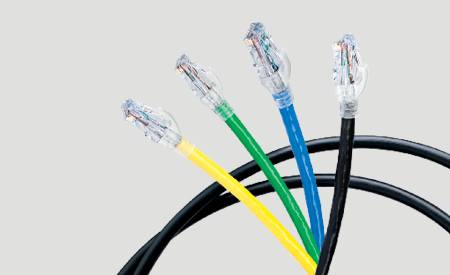
At Belden, we also offer traceable patch cords, which allow you to quickly and easily identify and trace network connections. For all of our patch cords, we also test every assembly to ensure proper channel performance. All Belden patch cords offer maximum return-loss performance under all patching conditions.
Learn more about Belden’s solutions for high-performance networks here.
About the author
Ron Tellas
Sr. Solution Architect, Enterprise Solutions, Belden
Ron Tellas is a subject-matter expert in RF design and Electromagnetic Propagation and joined Belden in 2016 to help define the roadmap of technology and applications in the Smart Building. He now takes these experiences to incorporate systems, equipment and connectivity into network solutions. Ron represents Belden in several standards organizations, committees of the National Electrical Code and as a board member of the FMP Alliance. He has a master and bachelor degrees in electrical engineering, a master in business administration and the inventor of 17 US patents. Ron is a proud recipient of the 2024 Harry J. Pfister award for his outstanding and impactful contributions to the Telecommunications Industry.