
On the surface, it doesn’t seem like a big deal – just a cardboard box that helps installers efficiently move lots of linear feet of cable. But cable packaging is more than just a way to transport and store cable. It can impact ease of installation.
Many of today’s cable packaging (like a cable box or cable carton) is:
- Not treated to resist water or moisture
- Heavy and difficult to carry due to wooden reels inside
- Expensive to ship
- Easily damaged during shipping and handling
When you consider these factors, it becomes clear: If not designed correctly, seemingly simple cable packaging can slow a project down, increase costs and potentially damage the cable inside.
As you choose cable and connectivity for your next project, don’t forget to consider the packaging it comes in. Here are some cable-packaging characteristics to look for …
1. Lightweight and Cost Effective to Ship
Instead of boxes that incorporate heavy wooden reels, look for cable packaging that utilizes lightweight – yet extremely heavy duty – PVC reels. This will reduce the labor required to move the boxes and decrease the costs associated with sending them out to jobsites.
2. Reinforced Handles
This may seem obvious, but many cable boxes don’t offer reinforced handles. (Or, if they do, they’re located on the side – where they’re hard to reach, difficult to grab and can end up causing injury.) In these cases, installers sometimes attempt to lift the box from its dispensing holes (which causes it to rip apart). Look for a box that integrates reinforced handles on the front and back of the box so it’s easy to grab – and won’t rip apart.
3. A Box that Can Stand Up to Shipping and Handling
Many cable boxes use a traditional single-wall cardboard design. Instead, search for a double-wall corrugated cardboard design that will resist crushing, puncturing and tearing. If the box is built to withstand use and abuse, it’s also likely certified to higher freight standards.
4. Water-Resistant Coating
A water-resistant coating ensures integrity during rain or snow – or if something is accidentally spilled on or near it. There are very few cable boxes in the industry that won’t degrade when they come in contact with moisture. This is because they don’t have any type of water-resistant coating.
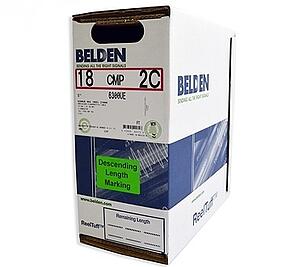
5. Descending Length Markings
Instead of guessing, or trying to tell how much cable is left in a box by lifting it or peering through the holes, look for packaging with descending length markings. These markings tell installers at a glance how much cable is left so they’ll know well in advance before they run out.
Building Better Cable Packaging
After hearing about the recurring problems installers face with cable boxes, we decided to design a better solution: Belden’s new ReelTuff reel-in-a-box cable packaging.
Analyzing some of the industry’s most popular box designs, we combined the best features of those with new, one-of-a-kind features that solve the most common (and most frustrating) problems with cable packaging.
More than 250 Belden cable products are currently available with ReelTuff cable packaging – and that number continues to grow.
About the author
Linda White
Product Line Manager
Spending nearly 30 years with Belden, Linda White tracks customer needs and buying preferences as she manages broadcast and AV product lines. When new information is uncovered about the industry, broadcast and AV customers or technology trends, she ensures that this data is considered as new products are designed and developed. Involved in product creation from initial concepts through to completion, Linda strives to improve Belden’s existing products while helping to develop new cables, connectors and assemblies for the broadcast and AV industries. During her time at Belden, she has worked in product management in both the broadcast and industrial markets, as well as supervising the inside sales department.