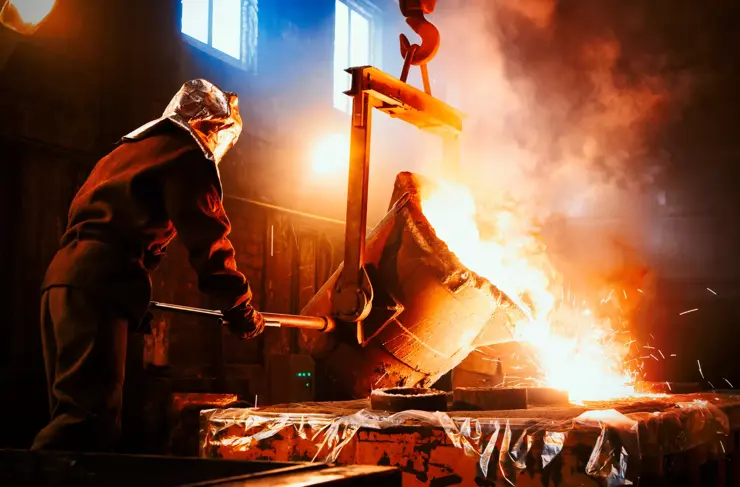
It’s not the size, make or model of a metallurgical plant’s crane or stacker that limits production. Instead, it’s how well that equipment can stay connected to control systems in harsh conditions.
The stakes of lost connectivity are high: When a critical machine can’t stay connected to the control room, risks aren’t limited to downtime—they also include dropped loads, damaged assets and injury to workers.
As plants move toward more automated operations, the wireless networks that link machines, PLCs and control rooms become just as crucial as the equipment itself. This shift is exposing the limits of traditional wired and wireless approaches, creating a strong case for PRP-based industrial wireless that maintains real-time control and keeps production—and people—safe.
Metallurgical wireless networks must deliver a high level of performance
Industrial wireless networks make the vital connections between equipment and control centers possible, supporting real-time control, status feedback and safety monitoring across automated operations.
To meet these demands, a metallurgical plant’s wireless network must reliably transmit PLC and CCTV video data from machine control systems to the host computer and control room in line with distinct transmission requirements.
PLC control data
High stability and low latency are required when transmitting PLC control data to guarantee the accuracy and safety of equipment operations:
- Packet loss rate of less than 1‰ (no more than two consecutive packet losses)
- Maximum transmission delay of less than 50ms
CCTV video data
Clear images and real-time data transmission must be ensured to provide reliable visual support for remote monitoring and decision-making:
- No dropped frames or lags
- Maximum transmission delay of less than 50ms
Why legacy networks fall short in metallurgical plants
Traditional wired and wireless network solutions struggle to deliver the dual demands of stability and efficiency that are central to metallurgical operations.
As equipment scales in size and mobility, legacy approaches are becoming even more unsuitable for these harsh, highly dynamic environments for two big reasons.
1. Wired systems drive up failures and maintenance requirements
Bucket wheel excavators, stackers and reclaimers often use a photoelectric composite cable system (a wired solution where the cable expands and contracts, dragging along with the movement of the equipment).
But this can cause several problems.
- Severe mechanical wear and tear: Long-term friction and bending cause cables to break. For instance, because of continuous movement and repeated flexing under heavy load, the cable replacement cycle for overhead cranes can be as short as three to six months.
- High maintenance costs: Cable replacement requires downtime. A single maintenance session takes between four and eight hours, which impacts production schedules.
- Significant cost accumulation: A single optoelectronic composite cable can cost thousands of dollars. Coupled with frequent replacement, the long-term costs are much higher than a wireless solution would be.
2. Conventional industrial wireless leaves critical gaps
While point-to-point, roaming and 5G wireless solutions solve the “wired drag” problem by removing the need for cables to physically follow moving equipment, they introduce new challenges. For instance, they still fall short when it comes to handling the extreme environments and stringent data-transmission requirements of metallurgical plants.
Single points of failure threaten production safety
Typical wireless solutions rely on a single transmission link. If a failure occurs, it can cause equipment to lose control (such as an emergency stop for an overhead crane) or cause a safety accident (a steel coil falling).
What causes wireless failure? The main culprits include:
- Hardware problems: High temperatures or vibration damages switches, optical modules, network cables or other equipment.
- Environmental interference: Signals are blocked by metal dust, equipment ages faster due to high temperatures, and interfaces can loosen due to mechanical vibration.
- Wireless conflicts: Other wireless applications within the factory, such as vehicles passing through, portable data terminals and equipment monitoring, occupy channels and cause signal interference.
Stringent reliability and latency requirements
Industrial communication protocols in metallurgical plants (such as PROFINET, PROFIBUS and PROFIsafe) have stringent real-time requirements. Conventional wireless solutions can’t support this level of performance for many reasons.
- Unreliable line-of-sight paths: Point-to-point industrial wireless is susceptible to obstruction, and packet loss rates increase sharply when the signal is interrupted.
- Excessive handover delay: Roaming solution switching delay reaches between 100ms and 300ms, far exceeding the 50ms threshold.
- Unstable radio environment: 5G’s industrial protocol compatibility is weak, and signal reflection attenuation is prone to occur in areas with dense metal density, resulting in delay fluctuations.
Using commercial-grade equipment in industrial environments
To cut costs, some metallurgical plants use commercial-grade wireless equipment. This equipment isn’t designed to operate amid high temperatures, vibration or dust. While it may work in the short term, consumer-grade equipment presents significant long-term risks.
For example, in environments above 60 degrees C (140 degrees F), device lifespan is reduced to just a few months. Dust causes short circuits and leads to cascading failures.
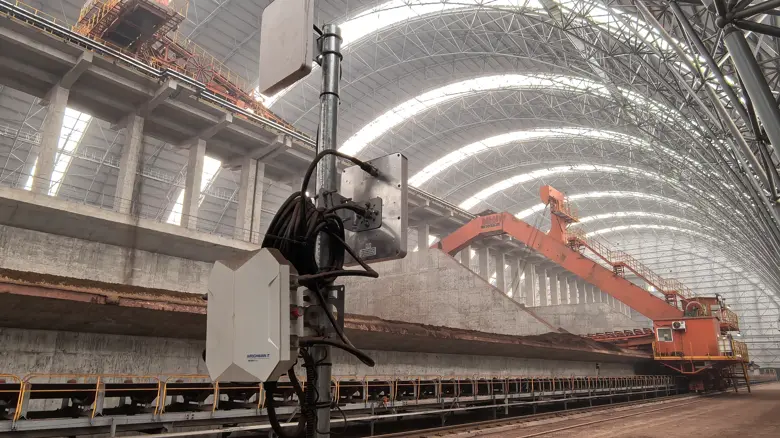
PRP wireless technology is a good fit for metallurgical plants
Parallel redundancy protocol (PRP) has become a key technology to help solve wireless network challenges in the metallurgical industry. With its unique dual-link hot standby mechanism, it addresses the pain points of many traditional solutions.
Its core advantage lies in its ability to maintain parallel transmission across two physical links, achieving zero packet loss and zero latency redundancy without the need for switching.
How PRP works in practice
Traditional redundancy protocols, such as the STP ring protocol, use a “fail-then-switch” model, where traffic is redirected to a backup link only after a fault is detected, introducing delay.
In contrast, PRP uses a “dual active links with first-arrival selection” model, where both links carry the same traffic at the same time. The earliest-arriving packet is used while the duplicate is discarded.
PRP networking features for metallurgical plants
PRP technology complies with IEC 62439, an international standard that defines zero‑recovery‑time redundancy for mission‑critical industrial Ethernet. It’s designed to keep communication running, even when links or devices fail.
This standards-based foundation enables the core features that matter most in metallurgical plants.
- Zero recovery delay: When a single link fails, the other link immediately carries data without packet loss or interruption, meeting the latency requirements of PLC and video data.
- Layer 2 transparent compatibility: Implemented in Layer 2, PRP doesn’t require changes to application-layer software and can seamlessly carry industrial protocols such as PROFINET and PROFIBUS.
- Flexible topology adaptation: Supports any network topology, including star, chain and ring, by adapting to complex equipment distribution in metallurgical plants.
- Dual-link independent deployment: The two links are physically or logically isolated (different frequency bands, paths, mounting locations, etc.) to prevent a single fault or obstruction from impacting both links at the same time.
PRP’s impact on metallurgical operations
In daily operations, PRP networking delivers clear stability, safety and cost benefits.
- Better network stability: Dual-link hot standby eliminates single points of failure from the root, keeping the data packet loss rate below 0.1‰ and the risk of continuous packet loss close to zero.
- Environmental adaptability: Dual-link physical isolation avoids the concentrated effects of dust, high temperature and metal obstructions.
- Production safety improvements: Equipment loss of control is prevented due to network failure, reducing safety incidents.
- Long-term cost optimization: Maintenance frequency and downtime are reduced. Although initial deployment costs are higher than the single-link solution, the full lifecycle cost is reduced by more than 30%.
Belden helps metallurgical plants upgrade their wireless networks
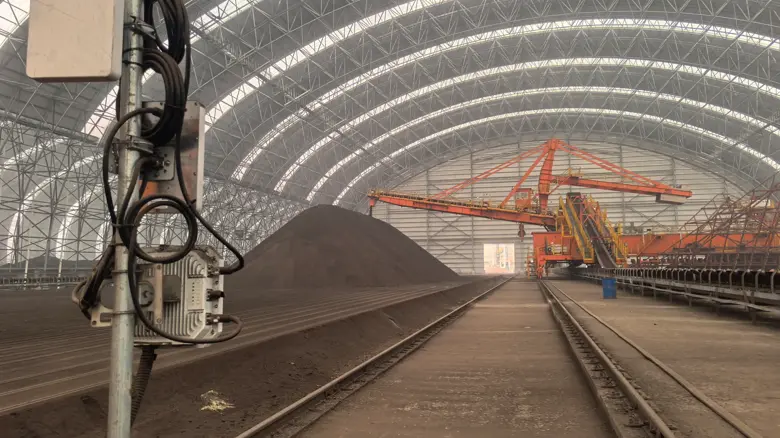
Belden’s team of industrial networking experts have developed a complete connection solution for the metallurgical industry based on the PRP protocol, and it’s already running successfully in many domestic steel mills.
Featuring dual-link redundancy; industrial-grade, harsh-environment equipment (-40 degrees C to 70 degrees C operating temperatures); IP67 dust and water resistance; and full industrial protocol compatibility, it provides reliable and resilient transmission for metallurgical equipment like overhead cranes, stackers and reclaimers.
Our Customer Innovation Centers (CICs) let you see these solutions designed, tested and validated in real-world conditions so you can connect to what’s possible. In the Shanghai CIC, for example, you can see PRP technology in action and gain a deeper understanding of how wireless network upgrades improve efficiency and safety in metallurgical production.
Related Links:
- What Makes Industrial Cybersecurity Different?
- Industrial Ethernet vs. Regular Ethernet: Why Does it Matter?
- Navigating Wireless Deployment in Automotive Manufacturing
- Optimizing Wireless Reliability