
So, you’d figure that industrial operators would love IO-Link technology. Unfortunately, love/hate is more like it.
You see, many users find that IO-Link technology is great until they have to manage the parameter libraries of the IO-Link devices within the network. It can become very complicated, and users or buyers recognize the high level of parameterization work too late. To ensure accuracy and efficiency, costly programmers need to be hired. The time and money spent doing this is an expense no one is excited by.
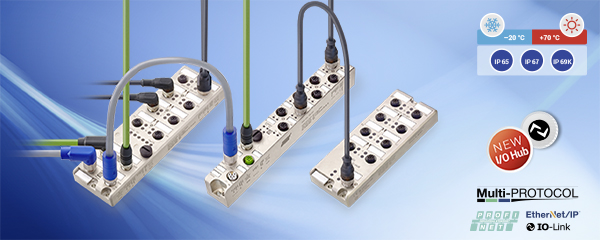
I should note at this point that Belden, through Lumberg Automation, is a well-known provider of IO-Link technology. Our engineers have continued to make a number of useful innovations to the technology over the years. For example, the incumbent LioN-Power IO-Link System can process up to 132 I/O signals per system, deliver an M12 L-coding power connection that serves up nearly twice as many amps of power as many other devices on the market, uses multiple protocols and is more versatile for use with the growing number of vendors and products entering the environment.
Nevertheless, I have to admit that just like every other IO-Link manufacturer in the industry, we were previously guilty of inflicting this parameters challenge on our customers too.
That’s why we partnered closely with an automotive customer of ours – one we have worked with for decades and know very well – to see if we could do something about this troublesome issue. I must say, the results have been extraordinary.
IO-Link Without the Complicated Part
“IO-Link without the complicated part.” Those words don’t come from me, but from the customer who implemented Lumberg Automation’s new in an early test bed. By the way, “Parameterization Times Zero” means IO-Link users don’t have to do any individual parameterization any more. Zero. It’s all preconfigured for you.
This is a modular system that you can put to work right out of the box – pretty much plug and play. It’s simple and easy to use, which is great news for anyone who depends on an IO-Link system in their industrial operation. Quite frankly, it’s really great news for anyone who has, up until now, avoided implementing an IO-Link system – and has been missing out on its extraordinary benefits of powerful machine-to-machine communication – because they hear about the parameter-setting challenges other users faced.
The Px0 products will be fully out on the market and available for purchase in January 2020. So that means IO-Link users will no longer have a “love/hate” relationship with their products. They can love the data and monitoring power they get, and love how extraordinarily easy it is to keep the benefits flowing.
Between you and me, Lumberg Automation/Belden is already planning new features to bring automation users even more powerful IO-Link capabilities in the future. For now, the Px0 concept of IO-Link devices is a huge leap in usability, perhaps the biggest one yet. We hope you find it useful.
What has your experience been with IO-Link? Are you getting all the benefits from it that you can be getting? As your industrial connectivity partner, we’ll be glad to discuss the possibilities and help you establish the most effective scenario for your specific needs.
About the author
Artjom Bil
Global Product Manager
Artjom began his career as a Junior Product Manager with Belden in 2017 after receiving his Bachelor degree in International Business and Management. In 2019, he was promoted to the position of Global Product Manager. Artjom supports the Roadmap for IO-Systems, focusing on creating full IO-Link solutions. Throughout his time at Belden, Artjom has completed several product launches within this niche. By focusing the portfolio on the customer perspective, the market has quickly adopted these products, positioning his portfolio among the most advancing portfolios within Industrial Connectivity Solutions.